

How to Get the Most Out of Your Security Provider
A strong security provider can give you visibility, guidance, reporting, and rapid response when something looks wrong. But the value of that service depends on the information, feedback, and access shared by the customer.
This stood out to me in two recent customer conversations.
In one, a customer mentioned they wished our security report included more detail on a particular metric. That feedback was valuable because it showed us what mattered most to them and where the report could better support their internal discussions.
In another case, we found out a customer had additional cybersecurity tools that had not been disclosed to us. Because those tools were not connected to the SIEM platform, we did not have visibility of the alerts or activity they were producing.
That creates a risk: something important could happen and go undetected simply because the right data was not being monitored.
These examples are a good reminder that cybersecurity is not a “set and forget” service. Your provider can only protect what they know about and monitor what they can see.
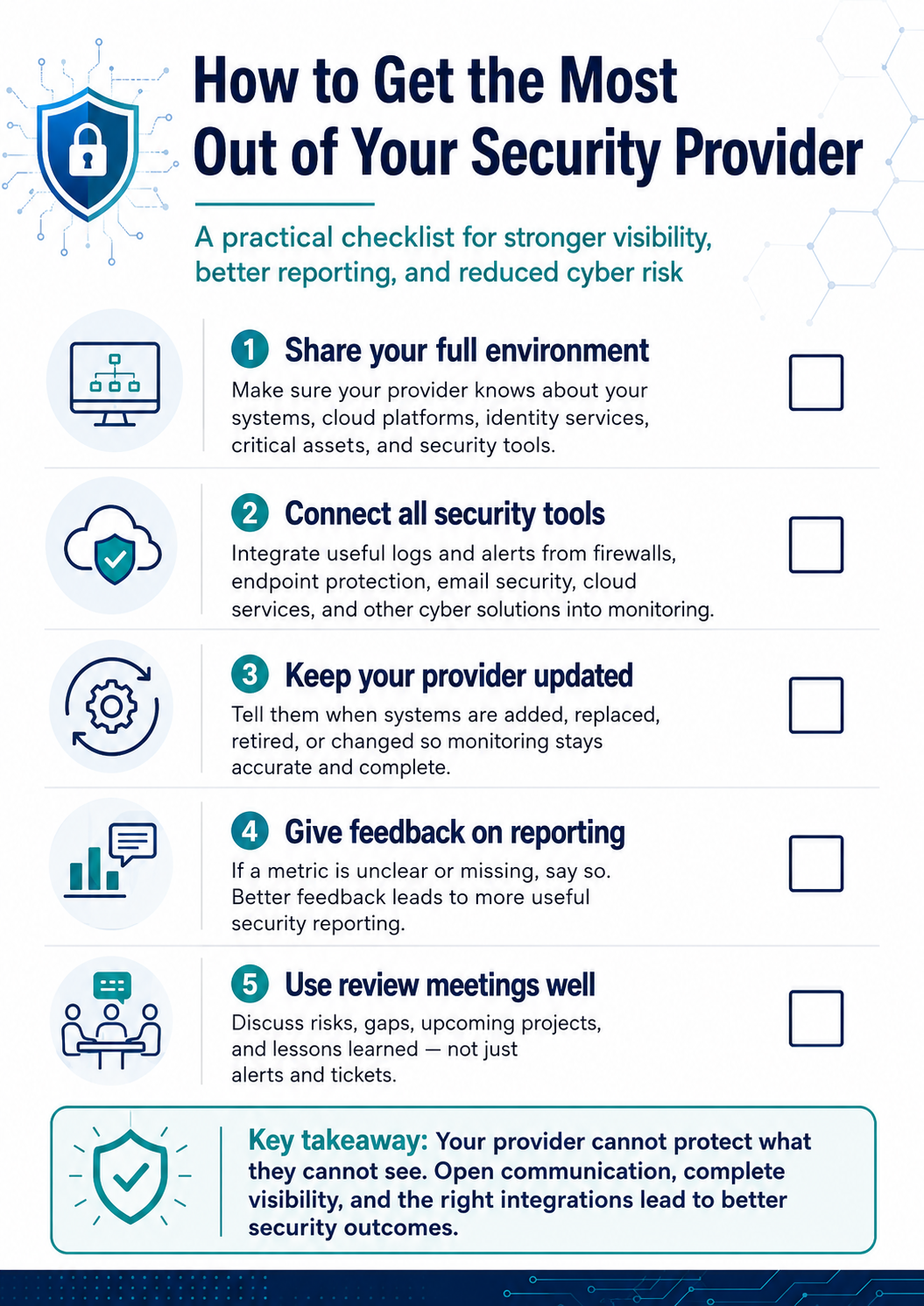
To get the most from your security provider, start with visibility. Make sure they know what systems, applications, cloud platforms, identity services, security tools, and critical assets are in use. If something new is added, replaced, or retired, share that information.
Integration is just as important. Firewalls, endpoint protection, email security, cloud platforms, identity services, and other security tools can all provide useful signals. If those signals are not connected into monitoring, the overall picture is incomplete.
Reporting should also be a conversation, not just a document. If a metric is unclear, missing, or not useful, raise it. Good feedback helps your provider make reporting more relevant and meaningful.
Regular review meetings are where this partnership becomes most valuable. They give both sides a chance to discuss risks, business changes, gaps, lessons learned, and upcoming projects before they become problems.
The best outcomes come when a security provider is treated as a partner, not just a supplier. The provider brings security expertise and monitoring capability. The customer brings business context, asset knowledge, and feedback.
Your provider cannot protect what they cannot see. But with open communication, complete visibility, and the right integrations, they can help reduce risk before it becomes an incident.
More from this months newsletter >

Australian Data Breaches: Lessons from Recent Incidents
Lessons from April and May’s Australian Data Breaches April and May brought a noticeable increase […]
Advanced Phishing Emails: Real-World Example and How to Stay Protected
Advanced Phishing Emails: Real-World Example and How to Stay Protected Phishing continues to be one […]
Spotlight Feature Devo: Real-Time Security Analytics
Spotlight Feature Devo: Real-Time Security Analytics Security leaders are facing mounting pressure with limited resources […]
Top 3 Cyber Events in Australia – February 2026
Top 3 Cyber Incidents in Australia – February 2026 February delivered another stark reminder that […]